Church and Ministry Liability in 2026: Employment Claims, Clergy Misconduct, Church Autonomy, Revival Windows, and Election-Year Pulpit Speech
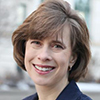
Sally Wagenmaker is an attorney whose work focuses on legal issues affecting churches and religious organizations. Her association with Church Law & Tax as a Senior Editorial Advisor reflects her involvement in providing legal insight and guidance on matters relevant to church leadership, governance, and organizational compliance.

William M. “Bill” Klimon is a partner in the Washington, D.C. office of Holtzman Vogel, where his practice areas include Faith-Based Organizations, Corporate Governance, Political Law, and Non-Profit and Tax-Exempt Organizations. He has counseled more than 700 nonprofit organizations, including churches and schools as well as private foundations, public charities, and political campaigns, on matters across an organization’s life cycle, from formation through dissolution.
Live Video-Broadcast: November 16, 2026
2 hour CLE
Tuition: $195.00
Co-Sponsored by myLawCLE
Get this course, plus over 1,000+ of live webinars.
Learn More
Training 5 or more people?
Sign-up for a law firm subscription plan and each attorney in the firm receives free access to all CLE Programs
Program Summary
Your Religious Clients’ Legal Shields Are Being Redrawn—Right Before an Election and a Wave of Revived Claims
Religious institutions face an unusually turbulent legal moment. The pending cert petition in USCCB v. O'Connell could turn church autonomy from a litigation defense into a threshold immunity. Lorenzo v. San Francisco Zen Center and Union Gospel Mission of Yakima sharpen an open question: how widely does the ministerial exception bar employee claims?
Leave governance documents untouched, and state revival windows expose the institution to decadesold abuse claims. Overlook supervision of staff and volunteers, and negligent hiring, supervision, and retention frameworks impose liability independent of the wrongdoer. Mishandle wage claims, firing decisions, or harassment complaints, and secular claims can reach past the ministerial exception. Speak carelessly from the pulpit before the November 2026 election, and the Johnson Amendment still applies after its challenge was dismissed.
You walk out with practitioner work product, not a doctrine summary. Expect risk-tiered frameworks for pre-election speech, governance and handbook modifications that safeguard religious liberty, and document retention guidance. Add insurance adequacy checklists and litigation posture strategies, including when to press church autonomy for early dismissal. Each tool applies directly to a client’s own structure and exposure—judgment no generic summary can supply.
Key topics to be discussed:
- Ministerial Exception Guardrails
Apply the lessons of Lorenzo v. San Francisco Zen Center and Union Gospel Mission of Yakima to decide when the ministerial exception bars a claim and when a secular claim survives. - Employment Claims Exposure
Assess wage claims, hiring and firing decisions, sexual harassment claims, and defamation exposure, then strengthen job descriptions, employee handbooks, and pre-litigation steps. - Clergy Misconduct Liability
Evaluate how negligent hiring, supervision, and retention frameworks, expanded statute of limitation laws, and nondisclosure restrictions create institutional liability independent of the individual wrongdoer. - Governance as Legal Shield
Recommend governance structures, document retention policies, and insurance adequacy audits that limit exposure under state-specific revival windows, where congregational versus
hierarchical structure shapes supervisory liability. - Church Autonomy Strategy
Use the pending USCCB v. O'Connell cert petition to shape early-dismissal strategy and decide whether to raise church autonomy as an immunity from suit or as a defense. - Pre-Election Pulpit Speech
Distinguish risk tiers in pastoral and institutional speech before the November 2026 election after the E.D. Texas dismissal of the Johnson Amendment challenge.
This course is co-sponsored with myLawCLE.
Date / Time: November 16, 2026
- 2:30 pm – 4:40 pm Eastern
- 1:30 pm – 3:40 pm Central
- 12:30 pm – 2:40 pm Mountain
- 11:30 am – 1:40 pm Pacific
 Closed-captioning available
Speakers
Sally Wagenmaker, Founder and Partner | Wagenmaker & Oberly
Sally Wagenmaker is an attorney whose work focuses on legal issues affecting churches and religious organizations. Her association with Church Law & Tax as a Senior Editorial Advisor reflects her involvement in providing legal insight and guidance on matters relevant to church leadership, governance, and organizational compliance.
- Education & Credentials
Sally earned her Juris Doctor from Emory University School of Law and her undergraduate degree from the University of Mississippi. She is admitted to practice law in Illinois, Georgia, and Michigan and serves clients from offices in Chicago, Illinois, and Grand Haven, Michigan.
- Recognition & Leadership
Sally previously served as president of the Christian Legal Society (CLS) and has contributed to legal education and professional development for attorneys and nonprofit leaders. As a Senior Editorial Advisor for Church Law & Tax, she contributes legal insight and expertise to resources addressing issues faced by churches and other religious organizations.
- Professional Involvement
Sally regularly presents at workshops, conferences, and educational programs for nonprofit leaders and legal and tax professionals. She also writes extensively on nonprofit legal issues through her firm’s blog, with publications addressing federal tax exemption, religious liberty, state tax exemptions, nonprofit governance, and political advocacy. Her work helps nonprofit organizations understand their legal responsibilities and address emerging compliance concerns.
- Experience
Sally is a founding partner of Wagenmaker & Oberly, where she provides legal counsel to tax-exempt organizations, including churches, religious organizations, public charities, private foundations, trade associations, schools, and social service providers. Her practice encompasses corporate law, tax, employment, and real estate matters. She also advises on legal risks affecting churches and ministries, including organizational governance, employment practices, liability prevention, and compliance. Through her legal practice and editorial work, she helps nonprofit leaders identify potential legal challenges and make informed decisions about their organizations.
William M. Klimon, Partner | Holtzman Vogel
William M. “Bill” Klimon is a partner in the Washington, D.C. office of Holtzman Vogel, where his practice areas include Faith-Based Organizations, Corporate Governance, Political Law, and Non-Profit and Tax-Exempt Organizations. He has counseled more than 700 nonprofit organizations, including churches and schools as well as private foundations, public charities, and political campaigns, on matters across an organization’s life cycle, from formation through dissolution.
- Education & Credentials
Mr. Klimon earned his J.D. with honor from the University of Maryland School of Law in 1998, where he was elected to the Order of the Coif, was a member of Phi Delta Phi, and received the Sam Allen Memorial Prize, the Bridgewater M. Arnold Prize, the Edward H. Curlander Prize, and an Alumni Association Course Award. He later completed an LL.M. in Taxation at Georgetown University Law Center in 2012. Before law school, he received a B.A. in History from the University of Pennsylvania in 1987 as a U.S. Army ROTC scholarship recipient, and from 1990 to 1992 pursued doctoral study in history at Cornell University as a Philip Merrill Fellow and Claude R. Lambe Fellow. He is admitted to practice in the District of Columbia, Virginia, and Maryland.
- Recognition & Leadership
Mr. Klimon was named the 2027 Best Lawyers “Lawyer of the Year” for Non-Profit/Charities in Washington, D.C., and has been listed in The Best Lawyers in America for 2020 through 2022 and 2027. He was recognized by Super Lawyers in 2026 and as a Leading Lawyer by The Legal 500 from 2012 through 2017. In 2025 he was elected a member of the American Law Institute, and he has been a Fellow of the American Bar Foundation since 2019.
- Professional Involvement
His service to religious organizations includes terms as a director of the National Federation for Catholic Youth Ministry from 2021 to 2024 and of the Catholic Youth Foundation USA from 2019 to 2021, and membership since 2021 in the Order of St. Nicholas of the Melkite Greek Catholic Eparchy of Newton. He currently serves as a director of Charitable Allies and as a trustee of the Collegium Institute at the University of Pennsylvania.
Within the American Bar Association, Mr. Klimon chaired the Nonprofit Organizations Committee from 2017 to 2020, co-chaired the Joint Subcommittee on Governance of Nonprofit Organizations from 2012 to 2017, served on the Task Force for the Model Nonprofit Corporation Act, Fourth Edition, from 2017 to 2022, and co-chaired the Business Law Section Subcommittee on the Model Nonprofit Corporation Act in 2022 and 2023. He has been a practitioner contributor to Black’s Law Dictionary since 2009, sits on the National Sporting Library & Museum Library Committee, and, as a law student, co-founded the University of Maryland chapter of the St. Thomas More Society.
- Experience
Mr. Klimon writes and speaks on the political activity, governance, and compliance questions facing religious and charitable organizations. His recent publications include “Religious Organizations and Political Activity: A 2026 Election-Year Guide,” “Charitable Organizations in an Election Year: Frequently Asked Questions,” “IRS Enters into Consent Decree Limiting Application of Johnson Amendment,” and “Back to Basics: Good Governance as Regulatory Prophylaxis.” His governance writing also includes “Beyond the Board: Alternatives in Nonprofit Corporate Governance” in the Harvard Business Law Review Online (2019), editorial contributions to the Guidebook for Directors of Nonprofit Corporations (4th ed. 2024), and entries on articles of incorporation, bylaws, and nonprofit formation in the Elgar Encyclopedia of Nonprofit Management, Leadership and Governance (2023). He has presented “Introduction to Corporate Law for Catholic Apostolates” for the Napa Legal Institute and “Top 10 Nonprofit Employment and Volunteer Problems, Solved” for the National Business Institute.
He is credited with pioneering alternatives to traditional board governance and the use of limited liability companies to pursue nonprofit goals, and he advises on nonprofit mergers, acquisitions, reorganizations, and collaborations. He served as an expert witness on nonprofit corporate law and governance in the NRA Foundation’s settlement of a lawsuit brought by the D.C. Attorney General, designed an alternative governance structure for ICANN, ARIN, and the Number Resource Organization, and represented GuideStar in its 2018 merger with Foundation Center, which formed Candid. He also acted as nonprofit corporate counsel to the Clinton-Bush Haiti Fund for its $50 million grant program after the 2010 earthquake, structured a partnership of five major private foundations and cultural institutions to acquire a $30 million archive out of bankruptcy, and oversaw the reincorporation of a 13,000-member professional trade association from New York to the District of Columbia.
Before joining Holtzman Vogel, Mr. Klimon was Senior Counsel at a boutique law firm and spent more than 20 years in the tax-exempt organizations group of a Washington, D.C. firm. He served as judicial clerk to the Hon. Raymond G. Thieme, Jr. of the Court of Special Appeals of Maryland, and earlier served in the U.S. Army at the U.S. Army Field Station Berlin.
Agenda
SESSION 1 – Religious Employment Law and Clergy Misconduct: Legal Duties and Risk Management | Sally Wagenmaker | 2:30pm – 3:30pm
This session examines the intersection of employment law and religion dimensions significantly impacting religious institutions, including wage claims, hiring and firing decisions, sexual harassment claims, and defamation. Key legal lessons from Lorenzo v. San Francisco Zen Center and Union Gospel Mission of Yakima will be shared, to help attorneys advise clients on strengthening employer protections, distinguishing secular claims, and applying ministerial exception guardrails. Tools include job descriptions, employee handbooks, governance documents, and effective pre-litigation steps. Clergy misconduct will be addressed too within employment law parameters including expanded statute of limitation laws, trending nondisclosure legal restrictions, and negligent hiring, supervision, and retention frameworks that may generate institutional liability independent of individual wrongdoer conduct. Attendees will leave with a working framework for advising religious employer clients on employment practices, optimal legal protections, and pro-active steps to minimize litigation risk and foster organizational flourishing.
BREAK | 3:30pm – 3:40pm
SESSION 2 – Governance and Legal Protections for Religious Institutions | William M. Klimon | 3:40pm – 4:40pm
This session examines the three most consequential governance and liability issues facing religious institutions heading into 2026: the pending Supreme Court cert petition in USCCB v. O’Connell that could redefine church autonomy as immunity rather than a mere defense, the final dismissal of the Johnson Amendment challenge and its practical implications for pulpit speech before the November 2026 election, and the accelerating wave of state revival window legislation exposing institutions to decades-old abuse claims. Attorneys gain a practical framework for advising religious institutions on governance structures, document retention, insurance adequacy, and litigation posture under each of these intersecting doctrines. Competencies gained include applying church autonomy doctrine to earlydismissal strategy, distinguishing risk tiers in pre-election pastoral and institutional speech, and assessing institutional exposure under state-specific SOL revival windows.
Credits
Alaska
Approved for CLE Credits
2 General
Alabama
Approved for CLE Credits
2 General
Arkansas
Approved for CLE Credits
2 General
Arizona
Approved for CLE Credits
2 General
California
Approved for CLE Credits
2 General
Colorado
Pending CLE Approval
2 General
Connecticut
Approved for CLE Credits
2 General
District of Columbia
No MCLE Required
2 CLE Hour(s)
Delaware
Pending CLE Approval
2 General
Florida
Approved via Attorney Submission
2 General Hours
Georgia
Pending CLE Approval
2 General
Hawaii
Approved for CLE Credits
2 General
Iowa
Pending CLE Approval
2 General
Idaho
Pending CLE Approval
2 General
Illinois
Approved for CLE Credits
2 General
Indiana
Pending CLE Approval
2 General
Kansas
Pending CLE Approval
2 Substantive
Kentucky
Pending CLE Approval
2 General
Louisiana
Pending CLE Approval
2 General
Massachusetts
No MCLE Required
2 CLE Hour(s)
Maryland
No MCLE Required
2 CLE Hour(s)
Maine
Pending CLE Approval
2 General
Michigan
No MCLE Required
2 CLE Hour(s)
Minnesota
Pending CLE Approval
2 General
Missouri
Approved for CLE Credits
2.4 General
Mississippi
Pending CLE Approval
2 General
Montana
Pending CLE Approval
2 General
North Carolina
Pending CLE Approval
2 General
North Dakota
Approved for CLE Credits
2 General
Nebraska
Pending CLE Approval
2 General
New Hampshire
Approved for CLE Credits
120 General minutes
New Jersey
Approved for CLE Credits
2 General
New Mexico
Approved for CLE Credits
2 General
Nevada
Approved for CLE Credits
2 General
New York
Approved for CLE Credits
2 General
Ohio
Approved for CLE Credits
2 General
Oklahoma
Pending CLE Approval
2.5 General
Oregon
Pending CLE Approval
2 General
Pennsylvania
Approved for CLE Credits
2 General
Rhode Island
Pending CLE Approval
2.5 General
South Carolina
Pending CLE Approval
2 General
South Dakota
No MCLE Required
2 CLE Hour(s)
Tennessee
Approved for CLE Credits
2 General
Texas
Approved for CLE Credits
2 General
Utah
Pending CLE Approval
2 General
Virginia
Not Eligible
2 General Hours
Vermont
Approved for CLE Credits
2 General
Washington
Approved via Attorney Submission
2 Law & Legal Hours
Wisconsin
Pending CLE Approval
2 General
West Virginia
Pending CLE Approval
2.4 General
Wyoming
Pending CLE Approval
2 General
More CLE Webinars
Trending CLE Webinars










Upcoming CLE Webinars
















































© 2026 Federal Bar Association